
Full Gardening Curriculum
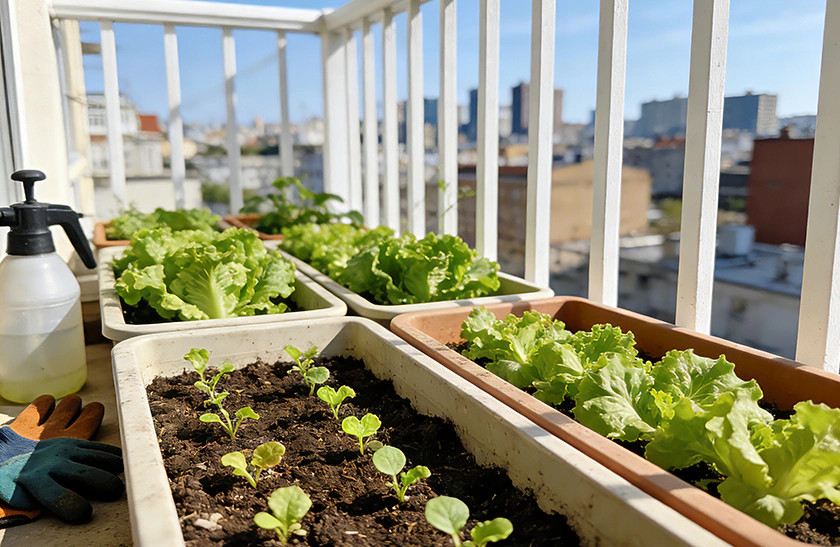
If your balcony doesn’t get blasting sunlight, lettuce is your perfect match. Thriving in cool, partial-shade environments, organic lettuce is budget-friendly, low-maintenance, and incredibly rewarding to harvest fresh for your table.
Lettuce comes in a stunning array of colors and shapes—from deep purples and vibrant reds to ruffled and frilled leaves. Some varieties are so beautiful they outshine common flowering plants! Mixing different types not only creates a decorative “edible garden” but also provides a diverse base for your home-grown salads.
Lettuce is incredibly easy to grow from seed, making it a favorite for beginners.
Once your seedlings have 3 or more true leaves, they are ready for their permanent home.
Lettuce only needs moderate sunlight; avoid harsh, direct midday sun. During the growing season, keep the soil consistently moist. Ensure there is adequate spacing between plants to allow for airflow and leaf expansion—overcrowding can lead to stunted growth.
While lettuce is hardy, high temperatures are its enemy. Heat makes the leaves turn bitter and can cause the plant to “bolt” (go to seed).
If you notice wilting leaves, your lettuce is thirsty! Because of their shallow root systems, lettuce plants cannot tap into deep water reserves. Maintain consistent moisture and ensure you water thoroughly (until it drains from the bottom) every time.
To keep your lettuce lush and harvestable for longer, start with fertile soil and supplement with nutrients regularly.