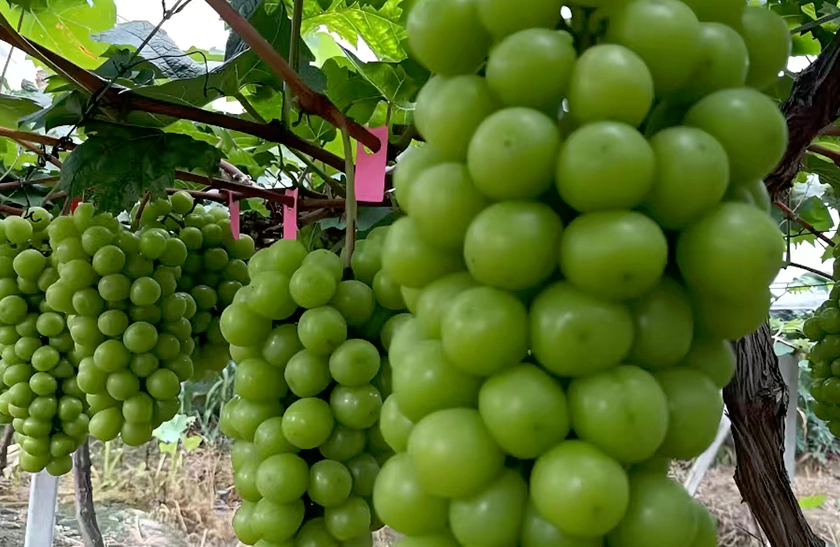
Growing grapes in pots is a highly effective way to achieve “fruit freedom” at home. Even in small spaces, a steady and bountiful harvest is possible through systematic management. Success relies on five core pillars: variety selection, soil preparation, nutrient management, pruning, and pest control.
1. Variety and Container Selection
For balcony setups, prioritize compact, disease-resistant varieties with low fruiting nodes.
- Recommended Varieties: Hanxiangmi, Moldova, and Tiangong Meixiang are ideal as they have compact root systems and exceptional flavor. While Kyoho and Shine Muscat are high-yielders, they generally require larger containers or open-ground spacing.
- The Container: Use breathable pots like unglazed terracotta or large Gallon Pots (typically 5–7 gallons). Aim for a diameter of 35–45 cm and a depth of 35–45 cm to allow sufficient root expansion.
2. Soil Mix and Planting
Grapes require loose, fertile, and well-aerated medium.
- The Recipe: Mix Peat Moss (or Leaf Mold), Perlite (or River Sand), and Fermented Organic Fertilizer (e.g., Sheep Manure) at a ratio of 5:3:2 or 4:3:3. Avoid using pure garden soil, which compacts easily and suffocates roots.
- Planting: Choose healthy 1-year-old saplings with vigorous roots and plump buds. Place crocks (broken pottery bits) at the bottom for drainage, spread the roots naturally over a layer of soil, fill the rest, gently firm the soil, and finish with a thorough “root-settling” water.
3. Water and Nutrient Management
- Watering: Follow the “Soak when Dry” principle—water deeply only when the top layer of soil feels dry. Avoid waterlogging to prevent root rot. In peak summer, increase frequency to early mornings or evenings; never water during the scorching midday heat.
- Fertilizing: Practice “Thin layers, frequent applications.” * Pre-sprouting: Use slow-release fertilizer or organic liquid feed to boost foliage.
- Fruit Expansion: After fruit set, switch to high-phosphorus and potassium feeds (e.g., a diluted KH2PO4 solution once a week) to enhance sweetness and color.
- Flowering: A low-concentration Borax spray can improve the fruit-set rate.
4. Pruning and Training
Pruning is the “secret sauce” for balancing growth and yield.
- Winter Pruning (Dormancy): After leaves fall, perform heavy pruning, leaving only 2–3 plump buds per fruiting branch.
- Summer Pruning (Growth Phase): Pinch off excess buds and “topping” (pinching the tips) of non-fruiting shoots (leave 5–6 leaves) to direct energy to the fruit.
- Training: Guide the vines based on your space using a Trellis. Common styles include the Conical, Columnar, or Fan shape. Secure vines with soft ties to improve airflow and light penetration.
5. Sunlight and Daily Maintenance
- Sunlight: Grapes are “sun-worshippers.” Place pots in the sunniest spot on your balcony, ensuring at least 6 hours of direct sunlight daily.
- Maintenance: Regularly loosen the topsoil to prevent compaction. In summer, use a mulch (like dried grass) to keep the roots cool.
- Pest Control: Prevent Powdery Mildew by maintaining airflow. A Lime Sulfur spray in early spring can “clean” the vines before the season starts.
- Repotting: Every 2–3 years, repot the plant in early spring to prune old roots and refresh the nutrient soil.
6. Overwintering
In colder regions, grapes need protection.
Reduce watering significantly; keep the soil just slightly moist to prevent the roots from drying out completely.
Move pots indoors or to a sheltered corner. Outdoors, wrap the main trunk with straw or insulating cloth.