

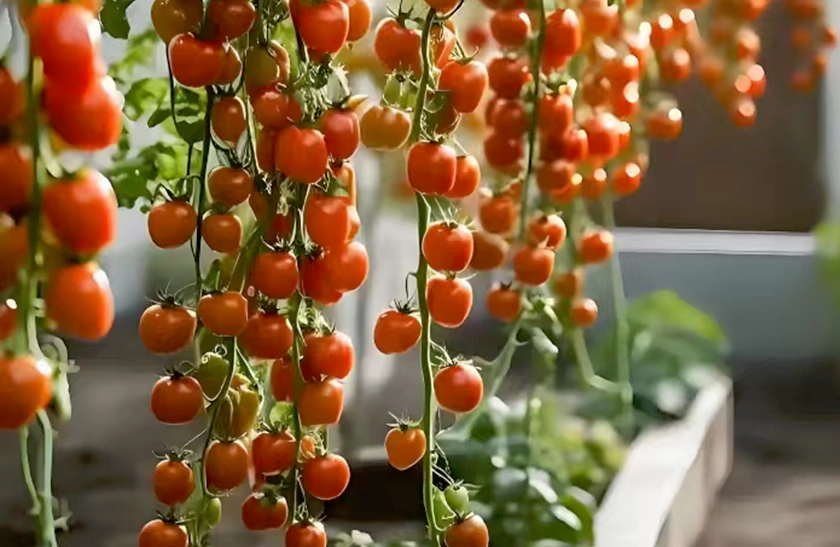
Growing tomatoes in pots is a rewarding experience that combines fun with a fresh harvest. Even as a beginner, you can achieve professional results by following this comprehensive step-by-step guide.
1. Variety Selection
For containers, prioritize compact plants with smaller fruits to save space and ensure success.
- Recommended: Dwarf varieties (e.g., Micro Tom, Tiny Tim, Black Pearl). These usually grow 30–40 cm tall and don’t require complex trellising. Cherry tomatoes are also excellent due to their disease resistance and tolerance for lower light.
- Pro Tip: Avoid thick-skinned commercial “shipping” tomatoes. Choose thin-skinned, flavorful varieties for the best home-grown taste.
2. Sowing & Seedling Care
- Timing: Best sown in Spring (March–May) or Autumn (August–September) when temperatures are stable between 18–28°C.
- Steps: * Use seed trays with loose potting mix. Bury seeds 1 cm deep, water well, and cover with plastic wrap to maintain humidity.
- Place in a sunny spot; sprouts should emerge in 5–7 days.
- Transplant when the seedling has 4 true leaves.
- Expert Hack: Speed up germination by placing seeds on a damp paper towel in a sealed container until roots just begin to peek out, then bury them in soil.
3. Soil & Container Setup
- Soil Recipe: A mix of Leaf Mold, Garden Soil, Sand, and Fermented Organic Fertilizer (e.g., Sheep Manure). Aim for a pH of 6.0–6.8.
- The Secret Ingredient: Mix crushed eggshells or bone meal into the soil to provide Calcium, which prevents fruit cracking and blossom-end rot later on.
- Containers: Use pots at least 25 cm deep with drainage holes. A 30 cm diameter pot can hold 1 plant, while a 40 cm trough can accommodate 2.
4. Daily Management
- Light & Temp: Tomatoes need 6+ hours of direct sun. Ideal growth happens at 18–25°C. Move indoors if winter temperatures drop below 10°C.
- Watering: Follow the “Soak when Dry” rule. Stick your finger 2 cm into the soil; if it’s dry, water it thoroughly. Keep soil consistently moist during the fruit-expansion stage.
- Fertilizing Strategy:
- Seedling Stage: Weekly diluted nitrogen-rich organic tea.
- Flowering Stage: Spray 0.2% KH2PO4 (Potassium Dihydrogen Phosphate) to improve fruit set.
- Fruiting Stage: Every 10 days, apply Potassium-rich feed (like fish protein or banana peel tea) to increase sweetness.
- Pruning & Training:
- Topping: Pinch the top bud once the main stem has 8 leaves to encourage side branches.
- Suckering: Remove “suckers” (extra shoots in leaf axils) to focus energy on the fruit.
- Support: Stake the plant once it reaches 30 cm to prevent it from toppling.
- Pollination: Indoors, gently shake the plant or use a cotton swab to assist pollination.
5. Pest & Disease Control
- Pests: For aphids or whiteflies, use a biological spray made of boiled chili and garlic water.
- Diseases: Avoid using unfermented rice water, as it attracts pests and burns roots.
- Root Rot: Caused by overwatering; improve drainage and reduce water.
- Gray Mold: Improve ventilation and spray a Baking Soda solution (1:500 ratio).
6. Harvest & Rejuvenation
- Harvesting: Pick when the fruit is fully colored for peak flavor.
- Rejuvenation: After the first harvest, prune old branches and apply nitrogen fertilizer to stimulate a second flush of growth. Repot every spring with fresh organic matter.
💡 Caleb’s Troubleshooting (FAQ)
- Flowers dropping? Usually due to low light or too much nitrogen. Increase sun and switch to phosphorus/potassium fertilizer.
- Fruit too sour? Reduce watering slightly during the ripening stage and add wood ash or calcium-magnesium fertilizer.
- Yellow/Curling leaves? Check for inconsistent watering. Ensure the plant is not sitting in water and has good airflow.