

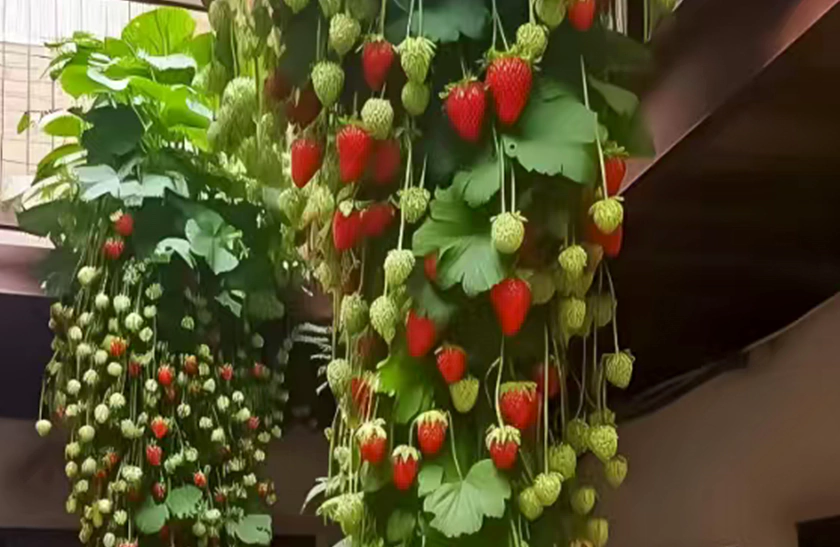
1. Choose the Right Time to Buy Seedlings
Strawberries in supermarkets are often available in winter, but the plants themselves are not extremely cold-hardy. Naturally, strawberries fruit in spring. Choosing the right time to start is crucial.
- Outdoor Pots: If winter temperatures drop below 5°C (41°F), avoid buying seedlings in autumn/winter. Cold stress causes yellow leaves and stunted growth.
- Indoor Balconies: If you can keep your space warm in winter, autumn is a great time to start. Warmth allows the plant to bloom early and fruit continuously until summer.
- Beginner Tip: If you can’t provide a warm winter environment, buy potted seedlings with fruit in early spring. These are easier to manage for multiple harvests.
2. Acclimatization (The “Original Pot” Phase)
Don’t repot immediately!
- Check the soil moisture; if the surface is dry, water it thoroughly.
- Place the pot in a well-ventilated area. In early spring, direct sunlight is fine, but if the leaves wilt, move the plant to filtered light (shaded area) until it recovers.
3. Maintain Warmth
Keep early spring seedlings in a warm spot. If night temperatures are low, cover the plant with a plastic bag or cloth to insulate. Aim to keep nighttime temperatures above 5°C.
4. Repotting & Fruit Thinning
After 3–5 days of acclimatization, you can repot.
- Soil: Strawberries have shallow roots and need loose, airy soil. Never use heavy garden soil. Use a high-quality potting mix or fruit-specific nutrient soil.
- The Pot: Use a standard or “squat” pot (not too deep).
- Base Fertilizer: Mix fermented sheep manure with a bit of bone meal and cover with 2cm of soil before placing the root ball inside. Ensure the soil level matches the original root ball height.
- Immediate Care: Water once (“root-settling water”) and place in a ventilated spot.
- Pruning: Snip off unpollinated fruits and runners (long stems) to save energy for fruit production. Save runners for propagation only in May.
5. Ensure Ample Sunlight
Once repotted, strawberries need full sun. Low light leads to “leggy” growth (weak, elongated stems) and poor fruiting.
6. Manual Pollination
Outdoor plants rely on wind and insects. For indoor/balcony strawberries, you must hand-pollinate. Use a soft brush or a fluffed-up cotton swab to gently brush the center of the flowers (the stamens and pistils).
7. Fertilization by Growth Stage
For the best flavor and organic results, use organic fertilizers:
- Flowering Stage: Apply fish protein fertilizer.
- Fruiting Stage: Every 10 days, use fermented soybean cake liquid or organic nutrient solution. You can also spray a micro-element fertilizer (focusing on Calcium) on the leaves.
- Ripening Stage (Color Turning): Increase Potassium. Use Potassium Humate or Potassium Dihydrogen Phosphate (KH2PO4) to enhance sweetness and color.
8. Fruit Thinning & Runner Management
A single cluster can grow over 10 fruits, but potted nutrients are limited.
- Thinning: Keep only 3–6 fruits per cluster. Remove deformed or tiny fruits. Plants with more leaves can support more fruit.
- Runner Pruning: Always cut off runners during the fruiting season to prevent nutrient drain.
9. Post-Harvest Care for the Next Batch
When 2/3 of the crop is ripe, start preparing for the next flush of flowers.
- After harvesting, bury some fermented organic fertilizer near the edge of the pot.
- Use a 1:800 dilution of KH2PO4 to stimulate new flower bud differentiation.
- Once new flowers appear, switch back to the regular feeding schedule (Step 7).