

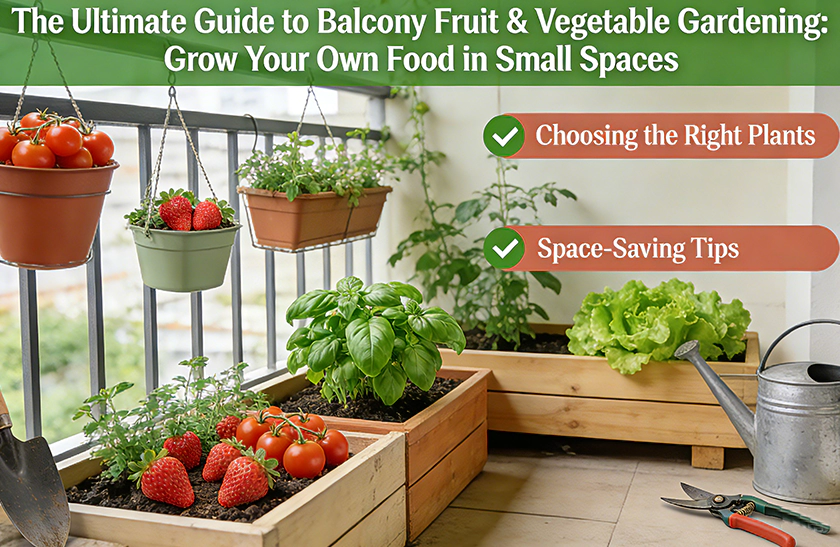
In an era of rising grocery prices and concerns over food security, the dream of having a lush, productive garden shouldn’t be limited by the size of your backyard. Whether you live in a high-rise apartment with a tiny balcony or a suburban condo with a small patio, you can achieve “Food Freedom.”
My name is Caleb Miller, and I’ve spent years perfecting the art of “Vertical and Container Farming.” In this guide, we will explore the exact systems you need to turn your balcony into a high-yield food factory.
1. The Foundation: Assessing Your Balcony’s Potential
Before you buy seeds, you must understand your micro-climate. Not all balconies are created equal.
Sun Exposure: The Engine of Growth
- Full Sun (6–8+ hours): Essential for “fruiting” crops like tomatoes, peppers, and cucumbers.
- Partial Shade (4–6 hours): Ideal for leafy greens (lettuce, spinach) and root vegetables (carrots, onions).
- North-Facing Balconies: These are challenging but perfect for low-light herbs like mint and parsley.
Wind and Weight Considerations
High-rise balconies often face strong winds, which can dehydrate plants or topple pots. Use heavy ceramic pots for stability or secure lightweight resin pots to railings. Also, be mindful of the weight limit of your balcony—wet soil is heavy!
2. Choosing the Right Crops: The “High-ROI” List
When space is limited, you want to grow crops that are either expensive to buy organic or taste significantly better when fresh.
The “Big Three” for Balconies:
- Tomatoes (Determinate vs. Indeterminate):
- Determinate (Bush): Perfect for small pots; they grow to a set height and fruit all at once.
- Indeterminate (Climbing): Best for vertical gardening; they fruit all season long but require tall trellises.
- Peppers and Chilis:
- Peppers are naturally compact and highly productive. A single “Habanero” or “Bell Pepper” plant can provide dozens of fruits in a single season.
- Leafy Greens (The “Cut-and-Come-Again” Method):
- Lettuce and spinach can be harvested by the leaf rather than the whole head, allowing for a continuous harvest from a tiny window box.
3. Container Selection and Soil Science
Your plant is only as healthy as its root zone. In a container, the plant is 100% dependent on you for its survival.
The Pot Matters
- Drainage is Non-Negotiable: Ensure your pots have large drainage holes. “Wet feet” (root rot) is the #1 killer of container plants.
- Size Guide: * 5-Gallon: Tomatoes, Peppers, Eggplants.
- 2-Gallon: Lettuce, Herbs, Carrots.
- Large Trough: Onions, Cucumbers (with a trellis).
Caleb’s Signature Potting Mix
Never use “Garden Soil” from the ground; it is too heavy and contains pathogens. Use a high-quality Soilless Potting Mix:
- 40% Peat Moss or Coconut Coir (for moisture retention).
- 40% Perlite or Vermiculite (for aeration).
- 20% Organic Compost/Worm Castings (for biological life).
4. Vertical Gardening: Think Up, Not Out
On a balcony, the floor space is your most valuable asset. To maximize yield, you must utilize the vertical plane.
Trellising Systems
- String Trellising: Popular for Indeterminate Tomatoes. A string hangs from the ceiling or a frame, and the plant is twisted around it as it grows.
- A-Frames: Perfect for Cucumbers and Grapes. The fruit hangs down, making it easy to harvest and preventing rot.
- Railing Planters: Use the perimeter of your balcony for shallow-rooted crops like strawberries and herbs.
5. Precision Watering and Nutrient Management
Container plants dry out faster than those in the ground. On a hot summer day, a tomato plant can use its entire water reserve in 6 hours.
The “Finger Test”
Don’t water on a schedule; water on demand. Stick your finger 2 inches into the soil. If it feels dry, water until it runs out the bottom of the pot.
Organic Feeding
Since frequent watering leaches nutrients out of the pot, you must replenish them.
- Growth Stage: Use high-nitrogen fertilizers (like Fish Emulsion) for green leaves.
- Fruiting Stage: Switch to high-potassium and phosphorus fertilizers to encourage large, sweet fruits and prevent “Blossom End Rot.”
6. Integrated Pest Management (IPM)
Pests like aphids and spider mites love the sheltered, warm environment of a balcony.
- Companion Planting: Grow Marigolds or Basil next to your tomatoes to confuse pests with their scent.
- The Neem Oil Solution: Keep a spray bottle of organic Neem oil and mild soap ready. It is a safe, effective way to stop infestations before they spread.
7. Troubleshooting Common Balcony Issues
- Why are my flowers falling off? Usually due to extreme heat or lack of pollination. On high floors, bees may not visit. Give your plants a gentle “shake” to help self-pollination.
- Why are my carrots stunted? Likely the soil is too compact or has too much nitrogen, which grows beautiful leaves but tiny roots.
- Why is my lettuce bitter? Lettuce “bolts” (goes to seed) in high heat. Use shade cloth or move pots to a cooler area during July and August.
8. Conclusion: Your Journey to a Green Sanctuary
Balcony gardening is more than just a way to save money on groceries. It is a therapeutic escape that reconnects you with the rhythm of nature. By starting small—perhaps with a single pot of cherry tomatoes or a window box of lettuce—you will gain the confidence to expand.
Remember, every master gardener was once a beginner who killed a few plants. The secret is to observe, learn, and keep planting.